
Barcelona 2045: New Proposals to Tackle the City’s Challenges
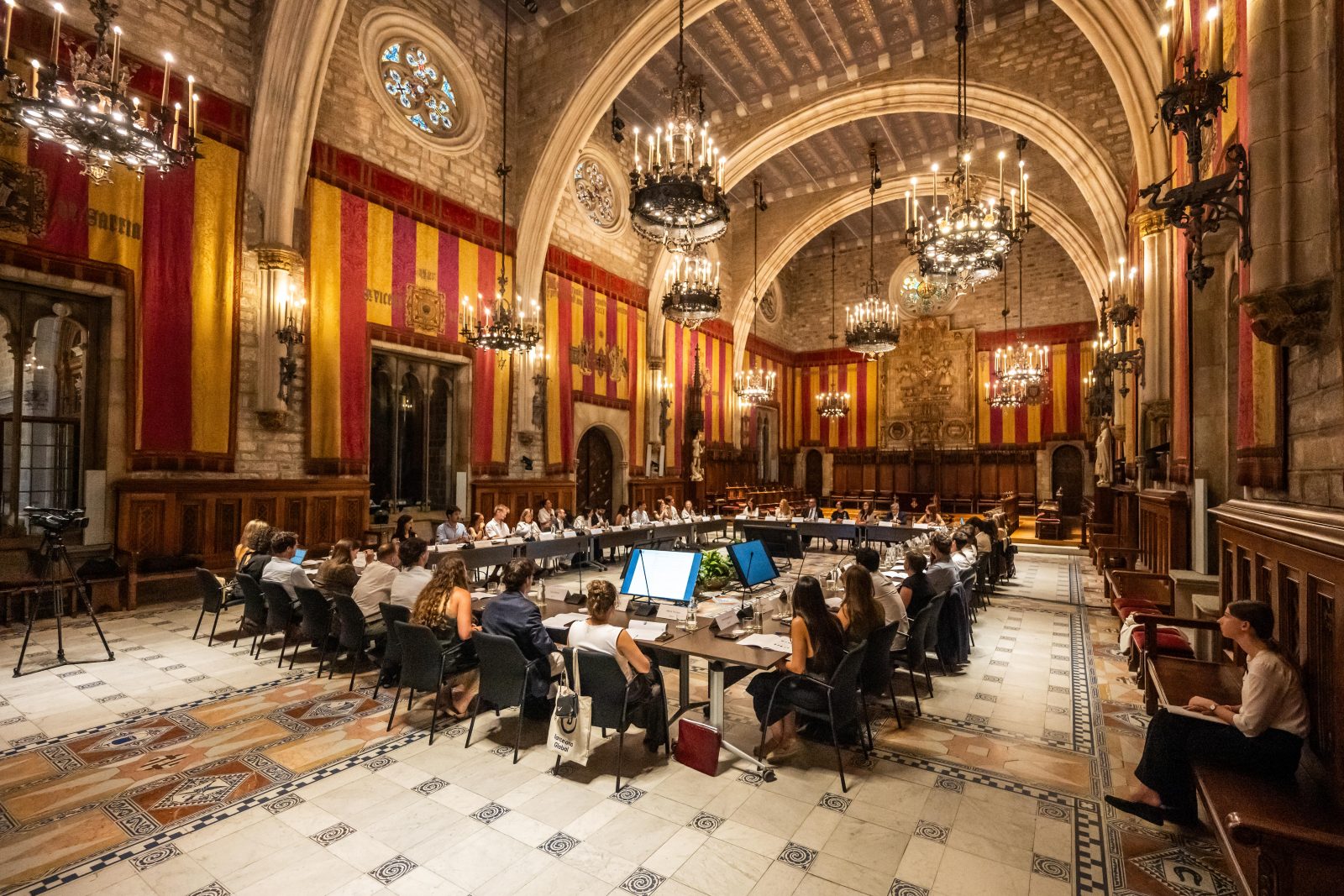
Barcelona looks to the future with an ambitious yet realistic vision. The final presentation of the Barcelona 2045 program, held in the Saló de Cent at Barcelona City Hall, brought forward key proposals to address the city’s major challenges. From tourism to technology, as well as culture and industry, the 37 young participants of the program spent months rethinking the city model and working to build a better future.
Driven by Barcelona Global, the Barcelona 2045 program aims to train young professionals committed to the city’s future. This sixth edition concluded with a set of concrete proposals that tackle structural challenges and put forward innovative solutions through public-private collaboration.
Culture for Everyone: Accessible, Connected, and Shared
Barcelona’s cultural life is vibrant, but it still doesn’t reach everyone equally. The cultural offering is fragmented, and many residents do not take part due to a lack of awareness or incentives. The proposal Barcelona Open to Culture (BOC) proposes a single digital platform that brings together the entire public and private cultural program, with an affordable subscription for residents and social benefits. The goal: to democratize access to culture and turn it into a driver of social cohesion.
Industry and Youth: A Connection That Needs to Be Restored
Barcelona must regain its industrial weight. Although the sector accounts for 20% of Catalonia’s GDP, the city is still associated almost exclusively with services and tourism. The proposal Barcelona Industry Raising proposes reconnecting young people with industry through hands-on training in companies, mentorship, and public visibility. The challenge is to change the perception of industry as outdated and show it as a source of stable, innovative, and sustainable employment.
A City to Live In... and Visit
With over 15 million visitors a year and clear pressure on neighborhoods like Barceloneta and the Gothic Quarter, the current tourism model needs to be refocused. The proposal DECIDIM ReTOURN suggests allocating part of the revenue from the tourist tax, through participatory neighborhood processes, to improvement projects in the most affected areas. The goal is for tourism to provide a tangible and visible return for residents, making Barcelona a city with tourism, rather than a touristic city.
Repositioning Barcelona as a Technological and Human City
In the technological field, the diagnosis was clear: Barcelona is losing specialized talent and faces a gap between the skills available and the jobs on offer. Although the city has a strong ecosystem, it has yet to fully recognize its potential. The proposal Barcelona Future Jobs Center aims to anticipate the impact of artificial intelligence on employment, promote new digital professions, and train 50,000 workers at risk of automation. An ambitious effort to turn the technological revolution into an opportunity for quality employment.
A Shared Future
All the proposals presented share a key element: public-private collaboration. As Antoni Fernández, Manager of the Economy and Economic Promotion Area at Barcelona City Hall, noted, the city’s future cannot be built by one side alone. He also emphasized the importance of addressing environmental challenges in a cross-cutting way and working toward a “shared prosperity” where every citizen has an opportunity.
Nadia Quevedo, Commissioner for Economic Promotion, closed the session by stating that the 2045 program is clear evidence that Barcelona is on the right track.
Barcelona faces the challenge of leading its own future. The proposals from the Barcelona 2045 program show that the city has the talent, vision, and commitment to make it happen.
If you want to know the latest English news about Barcelona and the people who bring it to life, sign up to our Blog.