
“When I think about 20 years of MWC in Barcelona, the first thing that comes to mind is its impact: not just the scale of the event, but the depth of its legacy”
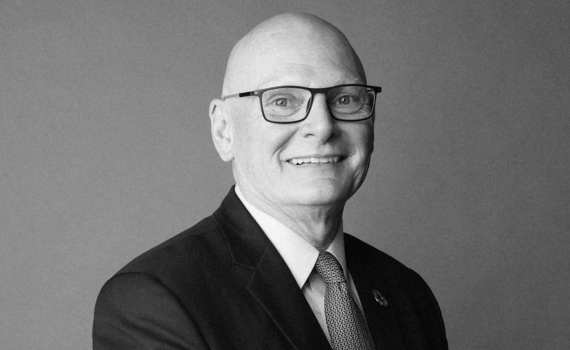
MWC is celebrating its 20th anniversary in Barcelona. Over the past two decades, the event has grown alongside the city in scale, ambition and global influence, and has generated countless connections, partnerships and deals that have transformed the communications and new technologies sector. The driving force behind it has been John Hoffman, CEO, GSMA Ltd, the event’s organising body, who from day one backed Barcelona, convinced of the potential of a city that has become one of Europe’s leading hubs for startups and innovation.
MWC is celebrating its 20th anniversary in Barcelona. Looking back, what’s the first thing that comes to mind from these twenty years here?
It’s almost impossible to narrow two decades down to a single moment. We’ve welcomed the world’s technology leaders to our stages, hosted thousands of brands across our exhibition floor, and created the environment for countless new connections, partnerships and deals that have shaped the industry.
However, what truly resonates and that I find inspirational is our partnership with Barcelona. When I think about 20 years of MWC in Barcelona, the first thing that comes to mind is its impact – not just the scale of the event, but the depth of its legacy.
Over two decades, we’ve grown alongside the city so that our mutual and continued success ensures MWC is delivering meaningful impact for Barcelona throughout the year, not just in the event week. For example, initiatives such as mSchools, which is helping teachers and schools successfully integrate technology into their daily practice. And the Donation Room at MWC, which extends the lifecycle of event materials and furniture.
I am grateful to the people of Barcelona for sharing their beautiful city with us and thank the Host City Parties for their support.
What would you say has changed more over these years: MWC as an event, or Barcelona as a city and tech ecosystem?
Both MWC and Barcelona have transformed enormously over the past 20 years and in many ways, their evolution has been deeply interconnected.
On the city and ecosystem side, the change has been truly profound. Barcelona has evolved from a relatively small, largely local tech scene into one of Europe’s leading startup and innovation hubs. That transformation has been supported by strong collaboration and long-term vision, particularly through the work of Mobile World Capital Barcelona which has helped anchor technology and innovation at the heart of the city’s development strategy.
Today, Barcelona is a highly international ecosystem. It attracts international founders, global tech talent, and multinational companies that have established major technology and innovation hubs here. The growth of incubators, co-working spaces, and homegrown success stories has accelerated entrepreneurship and created a far more mature and dynamic environment.
At the same time, MWC has grown in scale, ambition, and global influence. It has expanded beyond just being a major mobile industry gathering to becoming a true global platform for innovation, partnerships, and thought leadership across sectors. In doing so, it has reinforced Barcelona’s position on the international technology map and contributed significantly to the city’s economic strength and innovation.
If you had to sum up in one factor what makes Barcelona special as a host city, what would it be? Which detail confirms it for you every year?
What makes Barcelona special as a host city is its distinctive blend of architectural heritage, Mediterranean lifestyle, and strong cultural identity. From the iconic spires of Sagrada Família to its dynamic and fast-growing tech ecosystem, there are few cities that balances history, creativity, and innovation quite like it. Beyond its character and charm, Barcelona is exceptionally well-equipped to host global gatherings as it is served by an airport with good global connectivity and an efficient public transport system, along with a wide selection of quality hotels. And this is all backed by strong intuitional support for which we thank our stakeholders and partners and the Host City Parties. Over the years, this remarkable city has become far more than a host to MWC. It’s become our home, and a true partner. Our relationship with the city is a partnership built on innovation, collaboration and shared commitment. And that shared commitment is what delivers not only an exceptional week, but a lasting economic and social legacy for this extraordinary city
As a Barcelonian by choice, what surprises you most about Barcelona?
Barcelona has come to feel like a home away from home. Each year, I’m struck by the openness of its people, their warmth, and their ability to get things done. This city is a thriving hub of innovation, and when combined with a rich cultural heritage and a strong sense of identity, it’s easy to see what sets it apart.
Just when I think I’ve seen it all there’s always something that impresses me again. 4YFN, Talent Arena and Circuit X are examples of innovative initiatives launched locally which are already making their mark on the global stage.
Beyond the week of the congress, what legacy would you like MWC to leave in the city?
I would like MWC to leave a legacy in Barcelona of long-term empowerment, particularly through education, opportunity and responsible impact.
Since coming to Barcelona in 2006, MWC has generated more than €6.9 billion in economic impact to the local economy, as well as 173,000 part-time jobs. I am humbled by this outstanding achievement, which serves to underscore the strength of our partnership with Barcelona and our shared, mutual success.
And I’m proud of the local initiatives that extend far beyond the event itself. mSchools for example, is a programme delivered in collaboration between the GSMA, the Generalitat de Catalunya and Mobile World Capital. Through this partnership, we support teachers and schools in embedding digital tools and skills into everyday learning, helping to unlock students’ potential in a meaningful and lasting way. I like to think, one day, some of those students will step onto the MWC stage themselves as founders, engineers or global tech leaders.
Legacy also means being a responsible and thoughtful partner to our host city. Each year, I’m struck by the care our team takes to ensure that the impact of MWC is positive and tangible. For nine years, the Donation Room initiative has ensured that furniture, materials and supplies used during the event are repurposed and donated to cultural and social organisations across Barcelona and L’Hospitalet. In 2025 alone, 26 tonnes of resources were redistributed to the local community.
Ultimately, the legacy I hope MWC leaves is one that lasts year-round: stronger digital skills, greater opportunity, responsible practices, and a generation inspired to shape the future of technology from right here in Barcelona.
With initiatives like CircuitX at the Circuit de Barcelona-Catalunya: is it a symbolic “extra” for the anniversary, or the beginning of a more territorially distributed MWC?
Over the past 20 years the close collaboration between the GSMA, Mobile World Capital Barcelona and Fira de Barcelona have consistently expanded MWC’s ambition and impact. What began as a world-class event has grown into a broader platform for innovation, talent and ecosystem development across the city and region – and CircuitX is very much part of that trajectory.
CircuitX reflects the maturity of a 20-year partnership that continues to evolve, scale and project its impact far beyond a single week or a single venue.
This three-year initiative launched at MWC25, is designed to demonstrate how advanced connectivity, real-time data systems and immersive technologies can transform motorsport, mobility and large-scale events. In collaboration with Fira Circuit, it positions the Circuit de Barcelona-Catalunya as a living lab for next-generation connectivity. Everything from smart venue operations to connected and autonomous vehicle testing, as well as enhanced fan experiences.
Barcelona competes with other cities for global talent. How do you think MWC helps international professionals discover the city and want to stay- or come back?
Every year, MWC brings professionals from around the world to Barcelona for business, but what they discover goes far beyond the halls. They experience a city with a distinctive culture, a rich history, and an atmosphere that is unmatched. The cafés, restaurants, and the architecture, all contribute to an environment that feels both dynamic and welcoming.
That combination matters. While business may be the reason people first attend MWC, it is the overall experience that leaves a lasting impression – with a genuine desire to return, collaborate again, or even make the city part of their long-term plans.
And in terms of local talent: which initiatives are you most excited to strengthen so that students and young professionals here can find real opportunities linked to MWC?
When it comes to nurturing talent locally and on the global stage, there is no better event than Talent Arena, Europe’s premier event dedicated to developers and digital talent, hosted by Mobile World Capital Barcelona and co-located with MWC Barcelona. It’s the place where digital professionals, emerging tech talent, leading companies and educational institutions come together to create a hub for learning, networking and career growth.
It provides young professionals a gateway to meaningful careers and lasting opportunity within the global digital economy. And attendees of MWC26 and 4YFN26 can also attend via the priority entrance.
AI will be a central theme in 2026. What would you like the audience to take away as the main idea: more inspiration, more practical applications, or a bit of both?
At MWC26 Barcelona, we will explore how AI-driven intelligence and smarter connectivity are fundamentally reshaping industries and societies under our core themes Intelligent Infrastructure, ConnectAI, AI for Enterprise, AI Nexus, Tech4All and Game Changers. The goal is to inspire audiences with what’s possible, while showcasing real-world deployment and measurable impact. When combined with advanced connectivity, it becomes a strategic platform for economic, industrial and social progress, and MWC26 will demonstrate how to turn that potential into action.
MWC is increasingly bringing together sectors beyond telecoms. Which new sector would you be most excited to see grow in Barcelona in 2026?
One of the most significant milestones in our evolution was the decision in 2018 to evolve our brand name from “Mobile World Congress” to “MWC”. That shift reflected a reality that the mobile industry had become the foundation for a much broader digital ecosystem spanning cloud, AI, satellite, fintech, green tech and many other sectors shaping the modern economy.
What truly defines MWC’s expansion beyond telecoms is not just the sectors themselves, but the collaboration between them. The most memorable moments each year come from unexpected connections, when leaders from different industries meet, exchange ideas and spark innovation.
I’m especially excited to see new voices and new sectors joining us in 2026 with spaces such as Airport to the Future and New Frontiers, continuing to redefine what MWC represents: a global platform where technology meets every part of the real economy.