
“The greatest legacy of the World Capital of Architecture is that Barcelona looks at itself with greater architectural awareness and aspires to raise the quality of the environments we all inhabit,” by Maria Buhigas
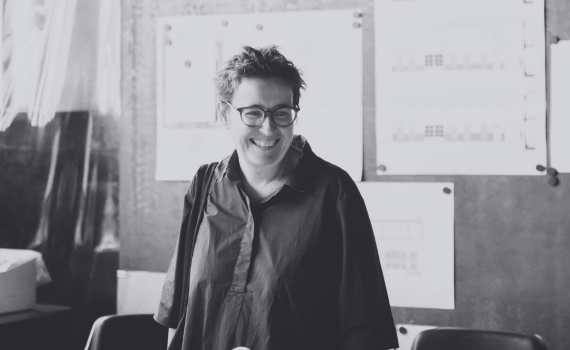
Speaking with Maria Buhigas is speaking about Barcelona from within: its limits, its opportunities, and its challenges. An architect and urban planner, and for the past three years the Chief Architect of the Barcelona City Council, Buhigas has become an essential voice for understanding how the city must evolve at a time marked by pressure on housing, the need to rethink public space, and the climate emergency. In a particularly significant year, with Barcelona designated UNESCO-UIA World Capital of Architecture 2026, we spoke with her about this milestone and the major challenges shaping Barcelona’s urban future.
If you had to summarize it in one sentence, what is Barcelona’s main urban priority today?
It could be summed up with the expression “the right to stay.” In other words, ensuring that the city provides the conditions that allow people to choose to remain here. This means housing, but it also means jobs — quality jobs that enable people to stay in the city. It means accessibility and a whole range of elements that make it possible for those who want to live in Barcelona to do so.
What does “city-making” mean today in a dense, consolidated Barcelona with little physical room left to grow?
Barcelona must stop seeing itself as an isolated island. Barcelona is part of a continuous metropolitan and regional context. The real city of Barcelona, which extends well beyond its administrative boundaries, does still have physical room to grow. And in Barcelona’s case, we still have some margin, because density can still increase.
What role can urban planning play in a crisis such as the housing crisis?
Many roles, starting with urban planning law itself, which would need reform because, since democracy, we have built fewer square meters than in previous periods. Urban planning plays a very important role, but in the case of the housing crisis it is not the only tool we must use. The problem we face is that in cities around the world, the group most affected by the affordable housing crisis is the middle class. If the middle class cannot access housing, then the reflection must be global. It must involve everyone with responsibilities in both the private and public sectors. Therefore, I believe the first step is recognizing that we need a major pact and a broad agreement.
Between new construction, urban regeneration, and renovation, where do you believe Barcelona currently has the greatest capacity for real impact?
In reality, in all three. Barcelona has 70,000 potential housing units included in approved planning projects, so all of that represents new construction. Through urban regeneration and renovation, the city has at least twice that figure with room for growth.
The issue is that we need to scale up urban management tools, because all our regulations are geared toward construction through land transformation and the traditional expansion of the city. We need tools that allow us to work within the already consolidated city.
In a city as compact as Barcelona, what should a good public space offer today in order to truly improve daily life?
I believe we must start saying out loud that Barcelona is a global reference for the care that public administration devotes to public space. Few cities in the world have the quality of public space Barcelona has, and cities everywhere continue to look to us for inspiration. Therefore, I would say that Barcelona’s public space is already an example of improving everyday life: 42% of the city’s surface area — excluding the coastline and Collserola — is dedicated to public space. Only 25% is occupied by buildings taller than one story, meaning the buildings where most of us live or work.
Large-scale projects are often discussed, but many transformations happen through less visible actions. Where do you believe Barcelona can achieve the most tangible impact in the coming years?
During this term, we have promoted the transformation of what we call “proximity and interior spaces.” We have identified 100 hectares distributed throughout the city with the potential to become public spaces. In four years, we will transform 20 hectares. For reference, the new Glòries Park covers 9 hectares. That means that in four years we will create more than twice the equivalent of Glòries Park.
Your career has been closely linked to strategic planning and the metropolitan scale. What mistakes do we make when we think about Barcelona only within its municipal boundaries?
Una cosa és tenir la competència o la responsabilitat dins d’un àmbit concret, i una altra cosa és que totes aquelles decisions i plantejaments que es fan dintre d’aquest àmbit tinguin un marc mental de la mateixa mida. Segurament, per la meva trajectòria, no tinc límits en el meu cap, penso que seria més realista parlar de la ciutat real, que és molt més àmplia i diversa.
It is a mistake to think that the rest of Catalonia makes sense without Barcelona, and vice versa. Therefore, we need an urban vision for Catalonia as a whole, in which Barcelona, as the capital, plays a very important role — one that I do not always think is fully recognized.
What mistakes do we make when we think only within municipal boundaries? I think they are the same mistakes we make when we become obsessed with the idea of the neighborhood. When we think about solutions to the urban problems we face today, the smallest scale is not necessarily the most appropriate one.
When discussing transportation, housing policies, economic development, climate change, or resilience, it is essential to understand that administrative boundaries are merely limits of direct management, not of planning — and even less so of reflection.
In the context of the climate emergency, how is the way we plan and design cities changing?
Urban planning must incorporate a culture of responsibility, efficiency, and extending the useful life of the city. Decarbonization is an essential part of the challenge, but it does not depend solely on public administrations: it also concerns the way we live, consume, move, interact, and organize the economy.
One of the most interesting ideas is reclaiming maintenance as a top-tier public policy. Citizens often value what is new more than preserving what already exists, but in a climate crisis scenario, maintaining sidewalks, streetlights, urban furniture, or public space is also a form of sustainability.
The other major transformation is adapting to the concrete impacts of climate change. In Barcelona’s case, these impacts mainly involve three fronts: drought, torrential rain, and heat. The city is expanding its reclaimed-water irrigation network to preserve urban greenery, which is essential for maintaining humidity, comfort, and environmental quality. The idea is clear: there will only be more greenery if there is proper water management to sustain it.
Barcelona is also preparing for the extremes typical of the Mediterranean climate. Stormwater tanks help manage episodes of heavy rainfall and prevent sewer system collapse, while the Climate Plan promotes cross-cutting measures such as cooling schools with solar energy and protecting the coastline from storms. Overall, the city is moving toward more resilient planning that combines emissions reduction, intelligent maintenance, and physical adaptation to new climate risks.
In 2026, Barcelona will experience a highly visible year as the World Capital of Architecture. What legacy would you like this event to leave behind?
Ideally, citizens will understand that architecture is not a luxury or a discipline reserved for major projects or for those who can afford it. Architecture is part of everyday life and can concretely improve habitability, comfort, energy efficiency, and the beauty of the spaces where we live.
A particularly powerful example is the project to transform party walls. Turning blind, dry, useless walls into façades with windows, balconies, insulation, or even vertical gardens can profoundly change the relationship between neighbors, their homes, and the street. In addition, municipal subsidies show that interventions that may seem unattainable can actually be within reach for many communities. The underlying idea is that architectural quality must stop being the exception and become the norm. Better insulation, more natural light, cross ventilation, or improving a façade are not minor gestures: they directly affect health, well-being, energy consumption, and the quality of public space. Architecture, properly understood, is a tool for urban regeneration and improving everyday life.
This is a great opportunity to bring architecture closer to citizens, make it understandable, and reclaim it as a collective good. That would be the best legacy: for Barcelona to look at itself with greater architectural awareness and aspire to improve the quality of the environments we all inhabit.
Is this also an opportunity to explain Barcelona to the world again, or above all to explain architecture to itself?
The Capital status was born primarily with an inward-looking purpose. More than explaining ourselves outwardly, it aims to help us better understand ourselves internally. The program, distributed across the city’s ten districts and built from the bottom up, has a clearly educational objective: bringing architecture closer to citizens, making it understandable, and defending it as a collective good.
The entire approach has been designed in a decentralized way with the city districts, and the only requirement we gave program coordinators was that the activities be educational and accessible.
So are professionals the main protagonists of the Capital year?
It is a Capital year designed for citizens, although it is driven by professionals. The sector will have its own dedicated space during the international congress planned for late June and early July. However, the bulk of the program is aimed at opening architecture to everyone, with more than 1,500 activities spread across ten months and all ten districts.
There will be exhibitions, family workshops, guided tours, conferences, and initiatives connecting architecture with other disciplines such as music, dance, cinema, and literature.
One of the main hubs will be the new House of Architecture, located in the former facilities of the Gustavo Gili publishing house in the Eixample district. The goal is for it to become a landmark space beyond 2026: an open place to understand, debate, and experience the city, while continuing to bring architecture, urban planning, and landscape design closer to citizens.
What would you like Barcelona to be like ten years from now?
I would like Barcelona to remain a city where young people can stay if they wish, with the conditions that allow them to do so. A city that understands diversity as its essence, because cities thrive on their ability to welcome and transform themselves. And a city that continues to be a space of coexistence and cohesion, where everyone feels included.
I would also like it to have demanding citizens who are nonetheless aware of the privilege of living in one of the most enviable places in the world. A city with challenges, certainly, but also with the ability to find solutions and preserve balance for future generations.