
“BARCELONA WANTS TO BE A CITY WITH A GLOBAL VOCATION AND A LOCAL SCALE”
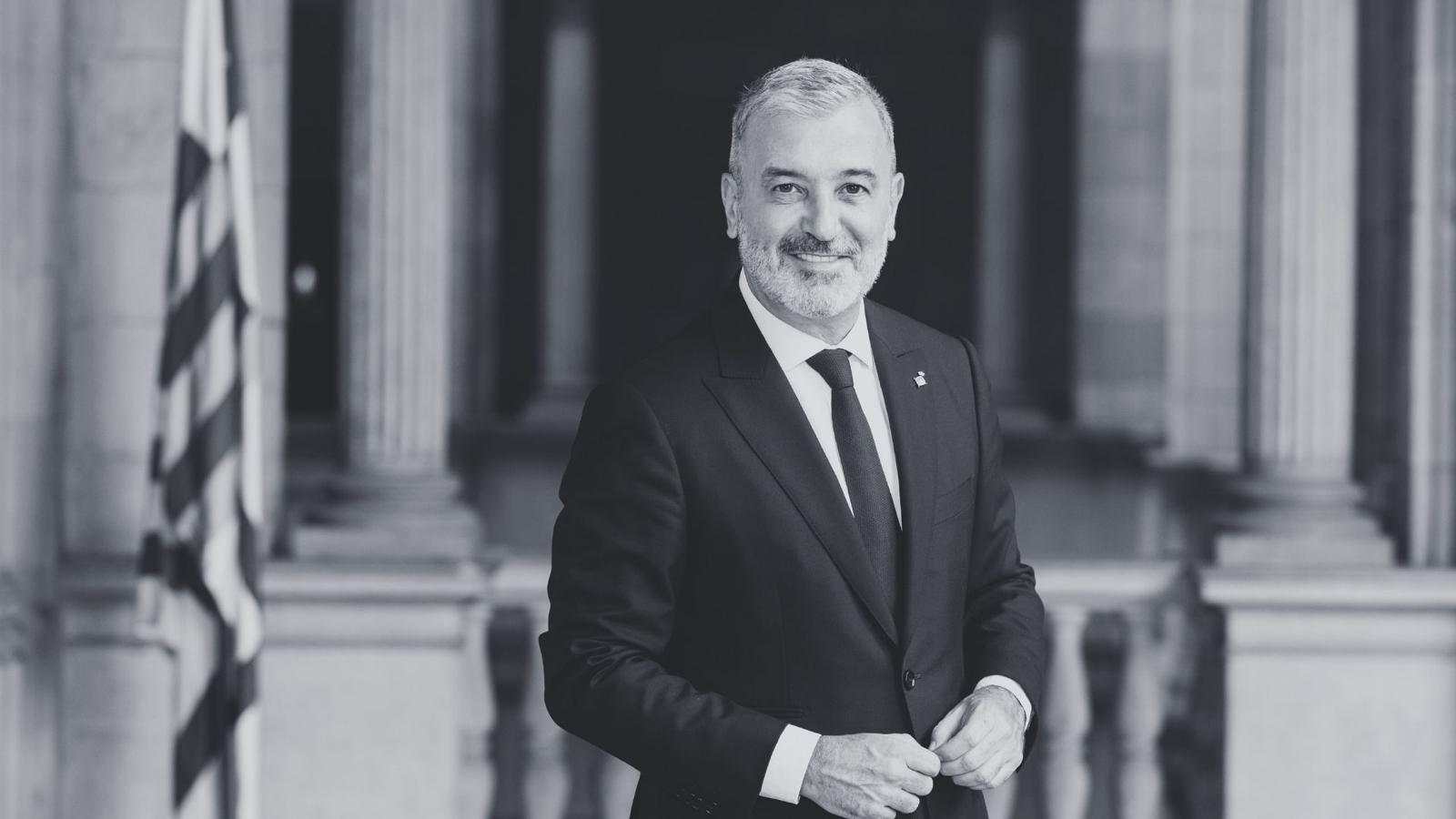
Barcelona Global has addressed a series of questions to the Mayor of Barcelona, Jaume Collboni, coinciding with the launch of InBarcelona, the Association's new newsletter. The mayor addresses the issues that shape the municipal agenda and explains the city's aspirations and challenges on topics such as housing, mobility, attracting and retaining talent, and Barcelona's projection onto the world stage.
Which aspect of Barcelona's capital status would you like to strengthen during this term?
This City Government is reinforcing a symbolic but absolutely relevant capital status: the capital of proximity. Barcelona wants to be a city with a global vocation and a local scale, and the City Council governs by attending to the details. That's why our top priority has been the excellence of the public space, the space we all share. That's why we are promoting public housing like never before, why safety indices are improving, and why culture, sports, and knowledge are experiencing a true revolution in Barcelona. In short, Barcelona is once again a city to live in, and also to experience.
When comparing Barcelona with other European cities, what two competitive advantages do you believe we should protect, and what two weaknesses should we urgently correct?
Barcelona's appeal and attractiveness on a European and global scale are undeniable. We are a city with global ambition, but above all, one of human scale, and I believe these two characteristics are our greatest asset and represent a very clear competitive advantage.
But at the same time, these two dimensions are also what we must be able to strengthen so we don't lose them. That's why we are taking decisive action on housing policy, on caring for our neighborhoods, on improving public transportation, on investing in new, local health facilities... without ceasing to work on major projects like the expansion of the Fira, attracting scientific and technological investments, the development of the Citadel of Knowledge, or the new Hospital Clínic on the Diagonal.
What is the city's plan to generate, attract, and, above all, retain talent in key sectors such as research, health, digital, and sustainability, among others? What objectives would you like to achieve?
The city plan is called Barcelona Impulsa and focuses, essentially, on diversifying the economy to be more competitive on the global stage and less vulnerable to market fluctuations.
This involves achieving three objectives: the modernization of infrastructure, namely the Port, the Airport, and the Sants and Sagrera rail hubs, the creation of 180,000 new jobs in high-value-added sectors and the transformation of 1.8 million square meters for economic activity, and the planning of 8 major growth areas: the Diagonal Salut axis, with projects such as the new Clínic, the BSC, or the Fraunhofer center; Sants-Montjuïc, which will become a hub for events, culture, and cooperativism; the Center, with the Citadel of Knowledge and the reurbanization of large areas; the waterfront, the epicenter of the blue economy and sustainability; 22@, as a major hub of innovation, creativity, and entrepreneurship; the Besòs, with green industry and circular economy projects; the Free Trade Zone, which is betting on Industry 4.0, logistics, and the food sector; and Sagrera, which will become a new economic and urban center.
Talent needs a place to live. How do we make talent and housing compatible?
By regulating the market. This government believes that Barcelona should have a global vocation and a local scale. Therefore, we must make it possible to attract the best talent while guaranteeing the social cohesion of all our neighborhoods.
We are achieving this by ensuring the housing market doesn't price anyone out: it can't be that the highest earners get to live in Barcelona while those who earn less are priced out. This is what rent regulation allows: in Barcelona, someone whose lease is up for renewal doesn't have to worry, because they know their landlord can't raise their rent indiscriminately.
On the other hand, we are decisively committing to social and territorial cohesion, among other things, through the rollout of the Neighborhood Plan. We must limit inequalities between neighborhoods, and we must ensure that the arrival of talent from outside is distributed throughout the city and avoids concentrating in very specific areas.
For many professionals and families, housing is the main issue. What measures do you think could have an impact in the short term?
I'll start with the long term: the big solution to Barcelona's housing problem is to increase the public housing stock. If we want prices to be affordable, we need to ensure that a sufficiently significant portion of the market is public housing. This is a long-term goal, although we've already gotten started from the City Council: we've doubled our apartment production from 500 to 1,000 per year, we will have delivered 3,000 keys by the end of the term, and we will have 5,000 under construction. All this is to achieve a public housing stock of 15,000 units by 2030.
The question, however, is what do we do in the meantime? How do we ensure that Barcelonans who want to live in Barcelona can stay here? This government has made two major decisions in this regard:
The first, we have contained the excessive increase in rent prices thanks to the Spanish Government's Housing Law. Since it came into effect in March 2024, we have reduced prices by 4.9% and have continued to increase the total number of contracts by another 1,550.
Second, we have decided that by 2028, 10,000 apartments currently in short-term rentals will return to the residential market. This is the equivalent of 10 years of public housing construction in a single decision, which will benefit more than 25,000 Barcelonians.
In the International Talent Monitor (ITM) produced by Barcelona Global, Barcelonians by choice view daily mobility in the city positively. Which measures would they like to see prioritized to improve it?
The approach to mobility policy is always long-term, but we have a clear sense of where we're headed. Three key concepts: global connectivity, a metropolitan perspective, and excellence in proximity.
First, we must ensure that Barcelona is a city that daily connects with the world's value-added centers through direct links. This is a fundamental element if we want to be competitive in attracting talent and generating shared prosperity. That is why we must move forward decisively, as the Generalitat government is doing, with the expansion of Barcelona–El Prat Airport.
Secondly, we must think about the daily mobility of the next decade in metropolitan terms, for a Barcelona of 5 million. We have the mechanism, and it works: the metro. We must constantly extend the Barcelona metro, connecting Paral·lel with El Prat Airport through Montjuïc, completing the L9, connecting with the FGC, and providing the future Sagrera intermodal station with a metro connection of a similar caliber.
And finally, we must consolidate the excellence of the daily transportation service: the subway, the bus, and the streetcar. Excellence is fundamentally about two things: increasing frequency where necessary, as we recently announced with the H12 bus line, and ensuring the safety and reliability of the transport. In this regard, we recently announced that crimes on the metro have decreased by 24% in Barcelona over the past year.
The Barcelona International Welcome Desk has been a success in facilitating the arrival and settlement of talent in the city, but what two or three administrative simplifications or procedural changes do you think could further improve the lives of those who start businesses and invest in Barcelona?
This has been one of the major areas for improvement for the current city government. Last April, we presented the Barcelona Fàcil plan, which has three main objectives: to repeal obsolete and redundant regulations, to simplify and shorten processing times for procedures, and to promote a more accessible and approachable administration, increasing the share of procedures that can be done virtually from 80% to 95% by 2028, without reducing in-person service. This will translate, among other things, into the launch of a professional service office, which will be a point of technical and qualified assistance for professionals handling urban planning procedures with the Administration.
Barcelona has a very strong civil society. How could the City Council improve its stable collaboration with these organizations on strategic city projects?
I believe this is one of the major changes the city has seen during this term: the City Council has reopened its doors to the city. We have gone from a default “no” to a “yes” whenever possible, and we have acted as a catalyst for investment that adds value to the city's well-being, whether public or private. We have collaborated with civil society on projects as significant as the World Architecture Capital, where the programming was created by the city's ecosystem, or the start of the Tour de France, where we will carry out promotional activities hand in hand with the city's sports, commercial, and cultural fabric. Obviously, we can always go further, but we've laid the foundation: together, we go further.
What model of tourism do you want for Barcelona, and what measures would you like to take to balance the economic impact of tourism with the quality of life in the neighborhoods?
I would like to consolidate the tourism model that the current government has promoted, which has focused on shifting from promotion to management. Barcelona is obviously an attractive and touristy city, and we want it to remain so. At the same time, however, we must recognize that the city has a limit, and to guarantee the well-being and excellence of public services for its citizens, we must not exceed that limit. This is the direction this government has taken, for example, through two key measures:
On the one hand, by reducing the city's capacity to host cruise ship passengers, primarily those on port calls, who are a type of tourist that brings little added value to our economic fabric, concentrates in specific areas of the city center, and makes very intensive use of our resources.
On the other hand, leveraging the power of tourism to serve the well-being of the citizenry, through, among others, the Climate School Plan, where, through the tourist tax, the City Council will climateize 170 public schools in the city.